
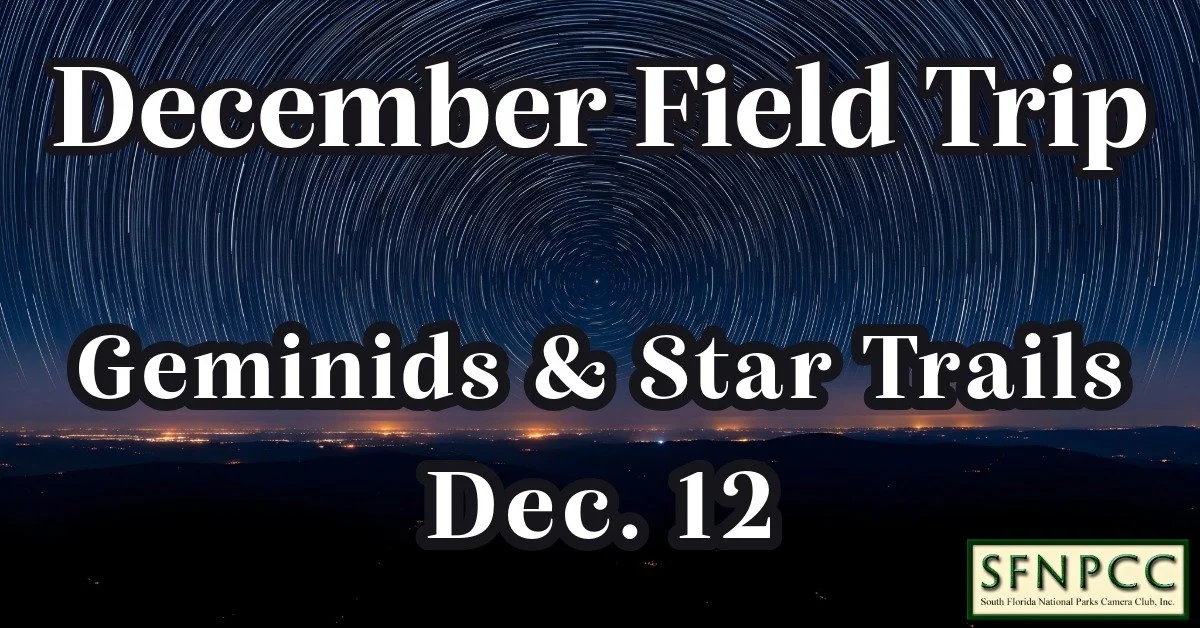
Geminids Meteor Shower is one of the boldest, brightest, and sometimes most colorful meteor showers of the year! Geminids give us one of the Northern Hemisphere’s best showers, especially in years when there’s no moon. The meteors are plentiful, rivaling the August Perseids.

⬅️ Click HERE to RSVP!
Meet us at the Ernest Coe Visitor’s Center where we’ll caravan to our shooting spot, leaving promptly at 6:30pm for points unknown. Be sure to arrive early to finish preparations, chit-chat with fellow photographers, or grab a last minute bathroom opportunity. Click the logo above to RSVP no later than Friday, December 11th, so I know who to expect.
The Geminid meteor shower peaks all night on December 13-14, 2026, a day or two AFTER our visit. However, before and after the shower’s peak, it’s still possible to catch meteors in a dark sky.
Overall duration of the Geminid meteor shower: The Geminids are visible from November 19 to December 24. This time period is when we’re passing through the meteor stream in space!
When to watch: Since the radiant rises in mid-evening, you can watch for Geminids all night. There will be a waxing crescent moon (midway between a new moon and 1st Quarter moon) that will set around 8:40pm. For the first hour or so, we should have a nice low-light moon hanging low in the southwest sky, to illuminate our foregrounds if we so wish. The moon will be at 12% so will likely not interfere with photographing meteors.
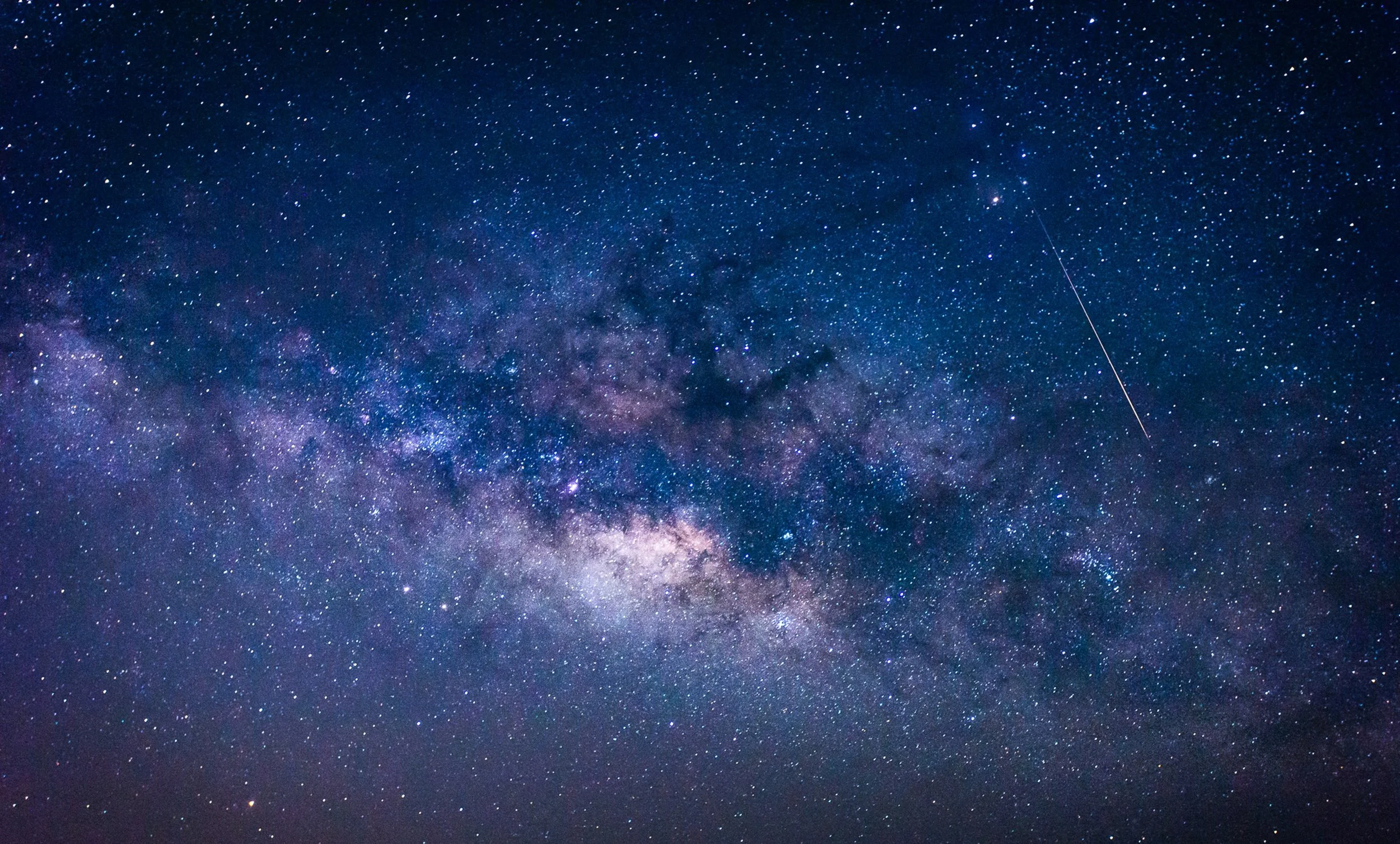
Meteor with a milky way taken in May (the core of the milky way will not be visible during the Geminid Meteor Shower).
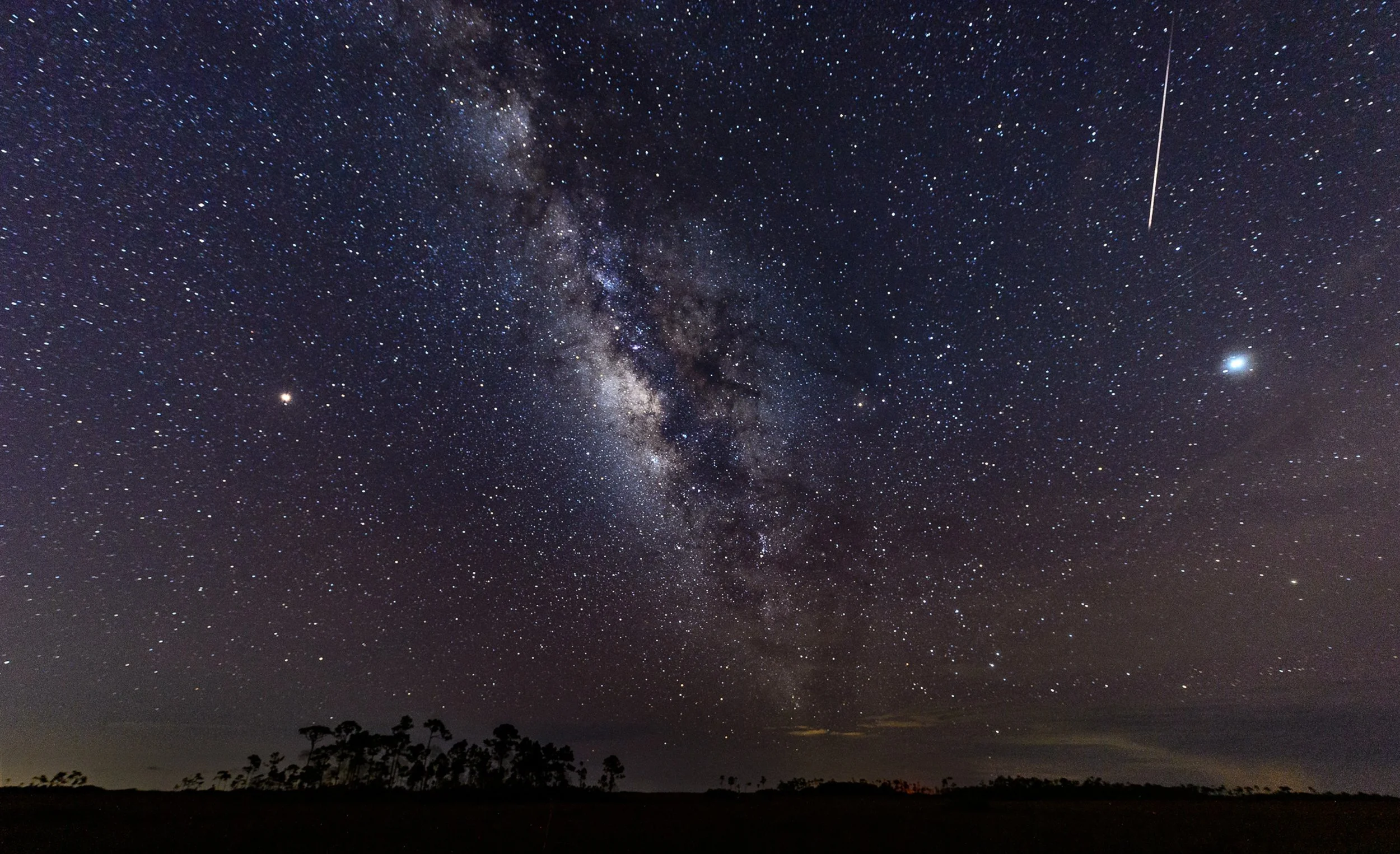
Meteor with a milky way taken in August (the core of the milky way will not be visible during the Geminid Meteor Shower).
What to bring!
Gear:
- Camera (if you have a spare, bring it and try an experimental lens or shoot another direction)
- Lens wide focal length with fast aperture (low numbered F-stop)
- Sturdy tripod
- Remote shutter release cable (or learn how to set up interval shooting in-camera)
Extras:
- Lawn chair to relax in
- Refreshments: water, coffee, snacks, etc.
- BUG SPRAY, THERMACELLS, BUG JACKETS, BRING YOUR ENTIRE BUG REPELLENT ARSENAL! Yes, even though it’s December, we’ve had a pretty wet autumn and mosquitoes may still be plentiful. I’d rather you bring everything and not need it, than to bring nothing and be miserable or have to cut your night short.
- Fully gassed up car! We may be going pretty deep into the Glades.
What to know! - DO YOUR RESEARCH AHEAD OF TIME!
Refresh yourself on photographing at night in a group ETIQUETTE!
Learn how to (or refresh your memory) focus to infinity in the dark. If you’re unsure, do a YouTube search for your specific camera make and model and “focus to infinity for night photography”. If you can’t find anything, just send me an email and let me know. I’ll see if I can find something for you. The time to ask these questions isn’t on the day of the event! And FYI, you don’t need to be in the deep dark night to practice focusing; you can practice anywhere, even in your backyard.
Learn how to (or refresh your memory) set up in-camera intervals (or use a wired shutter release cable). Best way to shoot meteors is to set up your camera to automatically shoot in intervals, just like you would do for a timelapse. When the night is over, you can review and pick out the frames that have the meteors in them. And when you’re done, you can take the whole group of images to use for a timelapse video if you so desire. So learn how to program your camera to shoot in intervals, or use a wired shutter release to do the same.
I think that’s about everything. Hope to see you all here for this event! And don’t forget to RSVP!